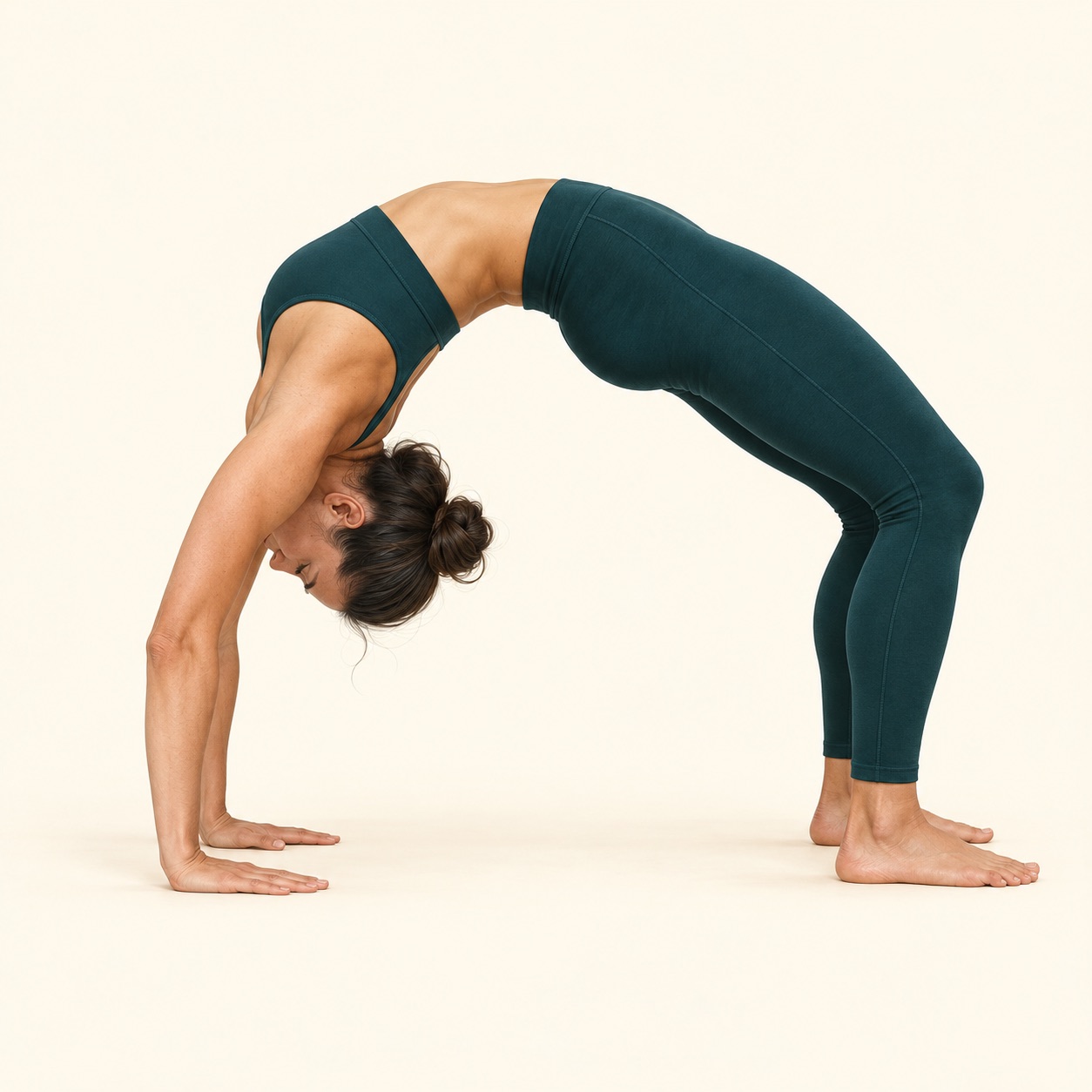
How to practice Wheel Pose
- Lie on your back with knees bent and feet grounded.
- Place hands beside the ears with fingers pointing toward the shoulders.
- Press into hands and feet, pausing on the crown only if the neck stays free.
- Straighten the arms and lift the chest away from the feet.
Practice tips
- Prepare with Bridge Pose and shoulder-opening work.
- Keep the knees tracking forward.
Practice note: Practice with experienced guidance; avoid forcing wrists, shoulders or lower back.
AdvertisementReserved for a relevant, non-intrusive sponsor
Understanding Wheel Pose
Wheel Pose, or Urdhva Dhanurasana, is a strong backbend supported by the hands and feet. Effective preparation includes shoulder mobility, leg strength and smaller backbends. The pose should feel distributed through the body instead of concentrated in the wrists or lower back.
Why do the elbows or knees spread in Wheel Pose?
They often spread when shoulder mobility, leg engagement or positioning is insufficient for the chosen depth. Work with a smaller lift, blocks or a qualified teacher rather than forcing the limbs parallel.
Common practice points
- Create length before moving into a deeper spinal curve.
- Keep the legs engaged so the lower back does not do all the work.
- Choose a smaller variation if breathing becomes restricted.
Prepare and progress
Review the steps before entering the pose, use the suggested modifications early, and leave enough energy for a controlled exit.
Useful preparations
Progress is not measured by how closely a pose matches a photograph. Comfort, breathing and control are more useful guides.