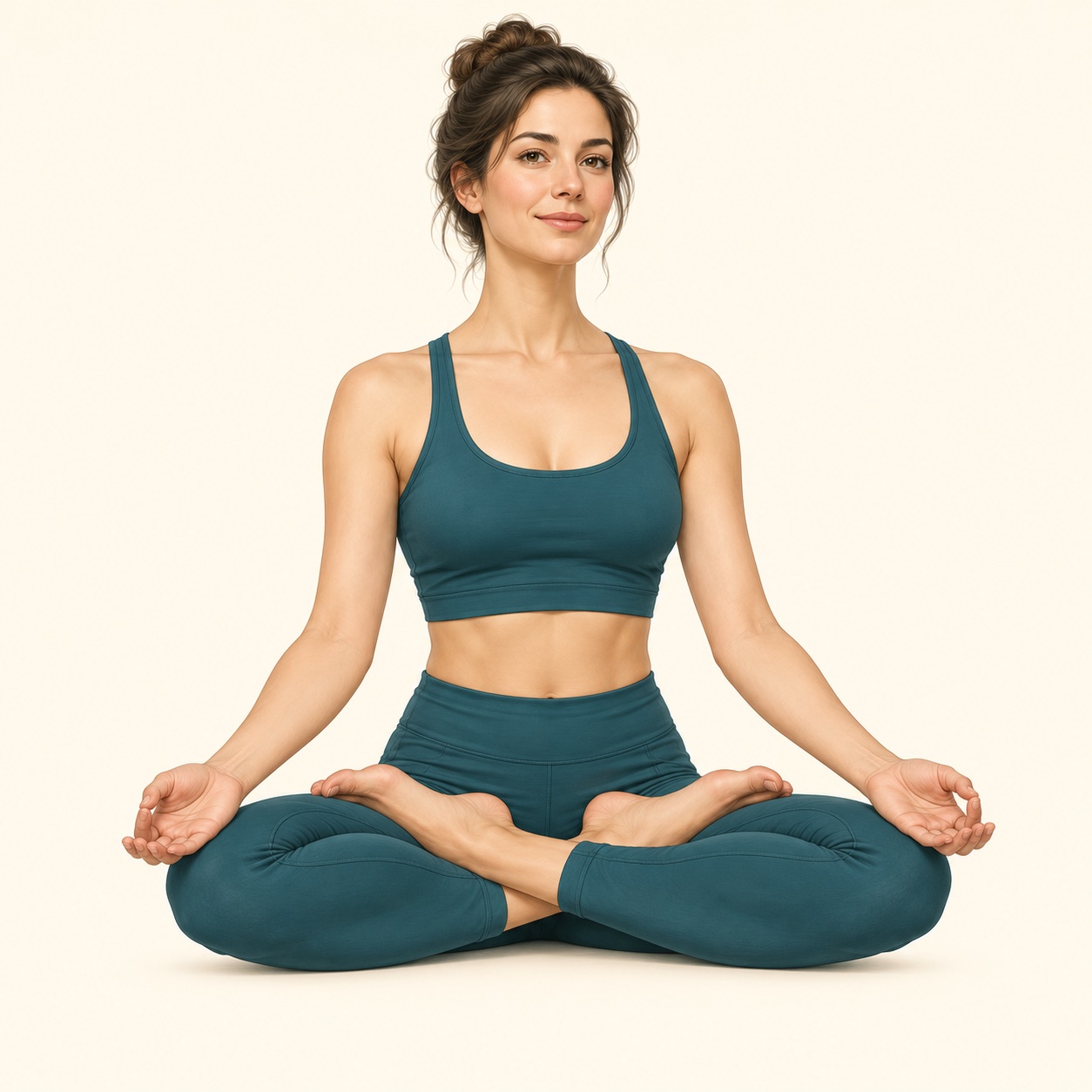
How to practice Lotus Pose
- Sit upright with both legs extended.
- Place one foot high into the opposite hip crease.
- Only if the first knee remains comfortable, bring the other foot into the opposite crease.
- Rest the hands and maintain an effortless upright spine.
Practice tips
- Practice Half Lotus on both sides first.
- Sit on a folded blanket for pelvic support.
Practice note: Do not force this pose; stop immediately with knee or ankle discomfort.
AdvertisementReserved for a relevant, non-intrusive sponsor
Understanding Lotus Pose
Lotus Pose, or Padmasana, is a seated position requiring substantial external rotation at the hips. The feet should not be pulled into place by twisting the knees. Half Lotus, Easy Pose or a supported cross-legged seat are complete alternatives.
Why should Lotus Pose not be forced?
If the hips do not provide the needed rotation, force can transfer into the knee joints. Stop when the knees feel pressured and choose a position in which both legs can rest without leverage or pain.
Common practice points
- Sit on a folded blanket if the pelvis rolls backward.
- Support any lifted knees rather than pressing them toward the floor.
- Let spinal length guide the pose instead of reaching for a visual endpoint.
Prepare and progress
Review the steps before entering the pose, use the suggested modifications early, and leave enough energy for a controlled exit.
Useful preparations
Progress is not measured by how closely a pose matches a photograph. Comfort, breathing and control are more useful guides.